

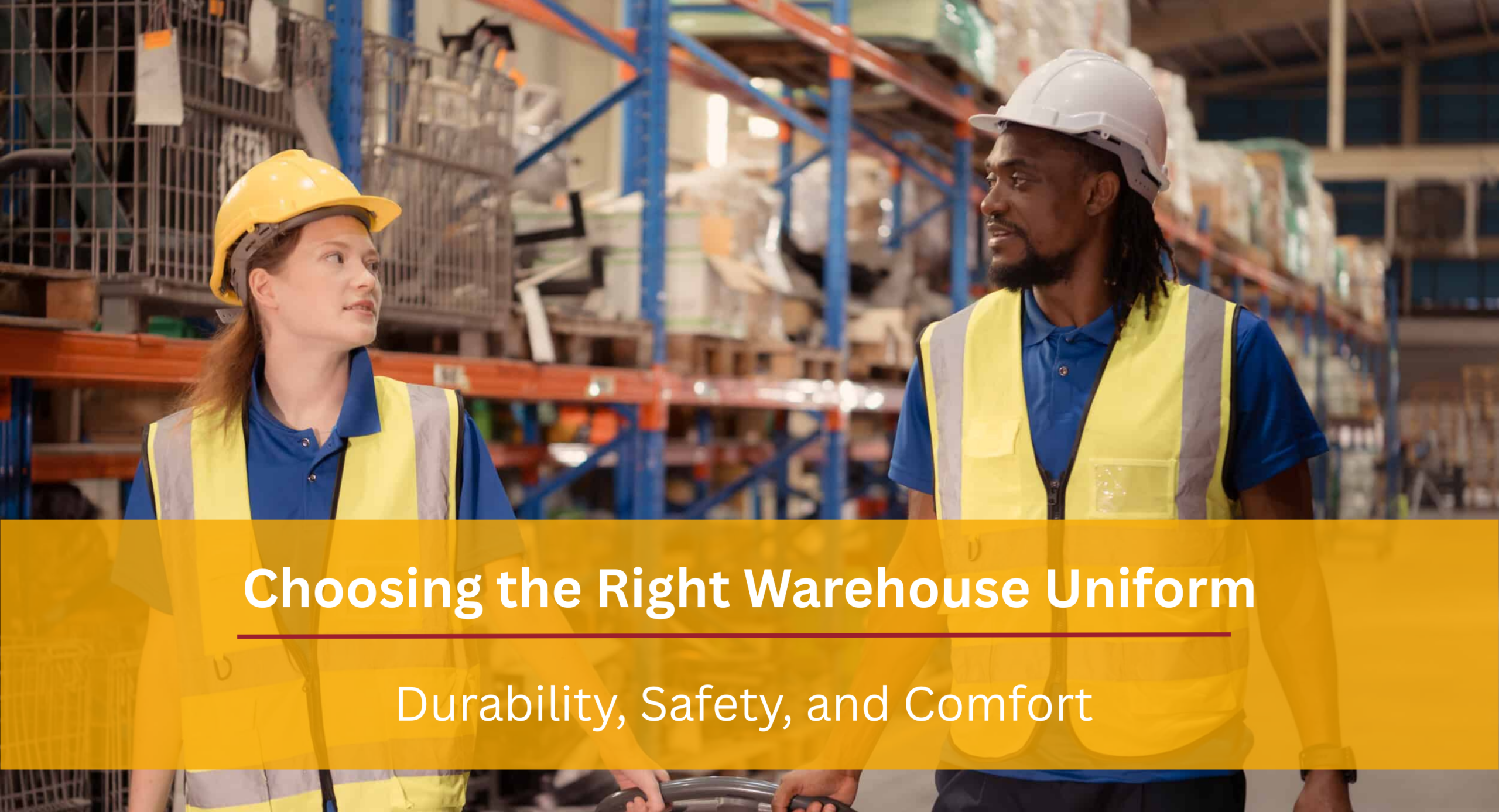
If you run a warehouse in Kansas City, Missouri or Houston, Texas, you know your team is constantly moving. They're lifting, reaching, climbing, and working in spaces that don't stop for much of anything. The uniforms they wear matter more than you might think.
When someone's dealing with ripped seams, uncomfortable fits, or fabric that doesn't breathe, they're not working at their best. They're distracted, uncomfortable, and sometimes less safe than they should be. Picking warehouse uniforms isn't about finding the cheapest option. It's about getting your people into gear that actually works for the job.
Durable Fabrics That Can Handle Real Work
Warehouses push clothing to its limits. Teams lift, bend, drag, and operate equipment for long periods of time. Uniforms must be built to withstand friction, strain, and repeated washing without breaking down.
Look for a warehouse uniform service that uses:
- Cotton blends for strength and breathability
- Ripstop or twill fabrics that resist tears and abrasion
- Double-stitched seams in high-stress areas such as shoulders and knees
- Reinforced pockets that do not collapse when tools are added
Durability protects more than appearance. When fabrics fail, employees start improvising. They tape knees, use mismatched layers, or bring clothes from home. This creates an inconsistent look, increases safety risks, and often costs more in the long run.
At Ace ImageWear, uniforms are inspected weekly during pickup and delivery, and repairs are handled before wear becomes a problem.
Safety Features Designed for Warehouse Conditions
Warehouse environments vary widely. A food distribution center does not have the same hazards as a packaging facility, and a cross-docking operation is not the same as a climate-controlled fulfillment center. The right uniform should match the safety requirements of the industry it serves.
Safety elements to consider:
- High visibility apparel for forklift traffic and busy loading docks
- FR garments in operations handling chemicals or flammable materials
- Moisture-wicking shirts in warm environments where heat stress is a concern
- Non-slip footwear or shoe covers for wet floors or refrigerated areas
- Long-sleeve options to reduce abrasions and cuts in manual handling zones
Uniforms should not simply meet minimum compliance. The goal is to support your warehouse team so they can work confidently without needing workarounds. A uniform provider experienced in industrial environments will help you choose garments that match each area of your facility, not just a generic warehouse category.
Comfort That Keeps Teams Moving All Day
Warehouse jobs are physical. People bend, reach, push, pull, and walk constantly. When uniforms restrict movement or feel heavy, fatigue sets in earlier and quality drops.
Comfort in warehouse uniforms includes:
- Breathable fabrics that release body heat
- Stretch panels for flexibility around shoulders, knees, and hips
- Proper sizing that accounts for motion, not just measurements
- Lightweight layers that avoid bulk while still offering protection
A comfortable uniform should not feel like a compromise. You do not want a garment that is soft but weak, or durable but stiff. When employees can move freely, they stay productive longer and their morale improves. The best providers measure employees on site and make adjustments when a worker changes roles or duties.
Matching Uniform Types to Different Warehouse Industries
Not every warehouse functions the same, and their uniforms should not either. Here are a few examples of how needs differ across industries:
Automotive and manufacturing warehouses
- Durable pants with reinforced knees
- Protection for repetitive handling
- Oil and grease-resistant fabrics
Chemical and pharmaceutical facilities
- FR options where applicable
- Strict hygiene compliance
- Garments that tolerate frequent laundering
Petrochemical operations
- Flame-resistant protective wear
- Heavy-duty materials for harsh conditions
- Safety-compliant garments
Food service and distribution
- Moisture-resistant options
- Breathable materials to prevent overheating
- Frequent rotation for hygiene standards
Uniforms should be assigned based on workflow, not titles. Forklift operators may require different apparel than dock workers, and restocking teams often need more breathable garments than machine tenders. Thinking about roles instead of departments leads to better uniform decisions.
Why Working With an Experienced Provider Matters
Uniforms only support your team when they are clean, available, and well maintained. Managing that in house takes time, storage, and constant oversight. Our uniform rental service removes that work. We track, clean, inspect, and replace garments so you never have to worry about shortages or damaged pieces.
Ace ImageWear serves warehouse operations across Kansas City, Missouri and Houston, Texas with uniform programs built for industrial environments. Our Smart Garment Technology follows each item through its life cycle, and the TrAce app lets employees request repairs or replacements directly from their phones.
We do more than deliver clothing. Our team:
- Measures employees on site
- Repairs uniforms before issues escalate
- Adjusts inventory as staffing changes
- Maintains consistent delivery schedules
With Ace ImageWear, your warehouse stays prepared, productive, and equipped with uniforms that work as hard as your team.
Ready To Outfit Your Warehouse Team?
If your facility needs uniforms that can handle real work while keeping your employees comfortable and safe, Ace ImageWear is here to help. We supply warehouse uniforms designed for durability, industry compliance, and everyday performance across Kansas City, Missouri and Houston, Texas.
Contact us today to schedule an on-site consultation or learn how a managed uniform rental program can support your operation.